
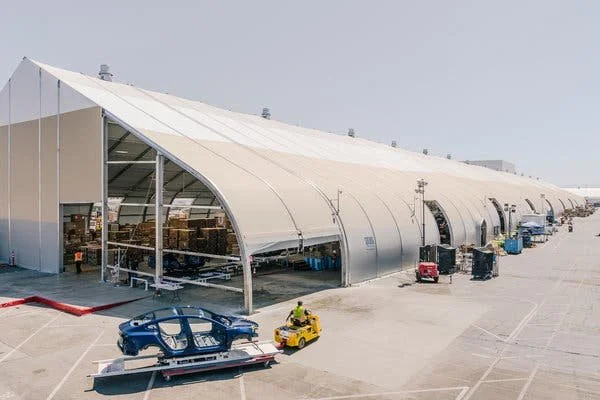
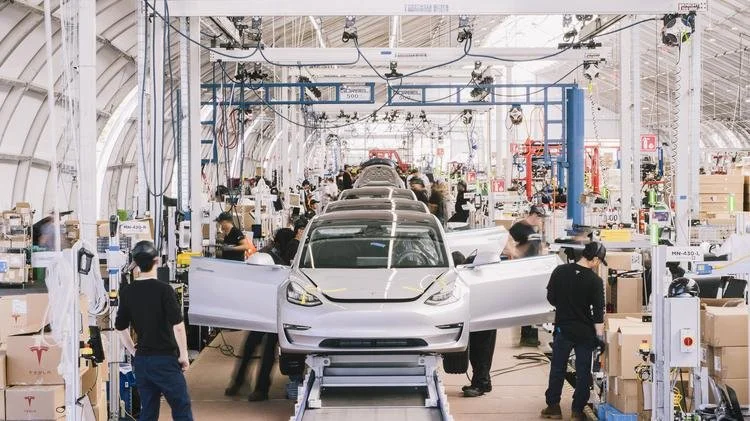
When a company like Google or Tesla needs space fast, they don't have the luxury of waiting on a traditional build timeline. That's where Sprung structures come in. Over the years, we've built more than a dozen of these systems for major corporate clients, and each project has reinforced the same lesson: when speed and flexibility matter most, prefab delivers.
What Is a Sprung Structure?
Sprung structures are a type of tensioned fabric building, engineered with a rigid aluminum frame and a durable membrane cover. Unlike traditional construction, the components are manufactured ahead of time and arrive ready for rapid assembly on-site. This isn't a temporary tent solution. These are permanent, code-compliant buildings that can be used for warehousing, manufacturing, distribution, and even community facilities.
Why Major Tech Companies Choose Prefab
For companies operating at the scale of Google, Tesla, and Amazon, growth doesn't wait for a conventional construction schedule. We've found that a few advantages consistently drive their decision to go with a Sprung structure:
Speed to occupancy: A Sprung structure can go from site prep to a fully operational building in a fraction of the time it takes to construct a traditional facility.
Scalability: These structures can be sized up or down depending on operational needs, which matters for companies whose demands shift quickly.
Reduced site disruption: Because major components are pre-engineered, on-site work is streamlined, which means less time, less mess, and fewer surprises.
Long-term durability: These aren't stopgap solutions. They're built to hold up for decades, even in demanding industrial environments.
More Than Corporate Campuses
While tech giants have relied on Sprung structures to keep pace with growth, we've also used this same approach for projects with a very different purpose, like the Navigation Centers we built for the City of San Francisco. That range says a lot about what prefab can do. Whether the goal is standing up a distribution hub in weeks or creating shelter space for a community in need, the same core advantages apply: speed, precision, and flexibility.
What Sprung Structures Have Shown Us
From our work with Sprung structures, we've learned that:
Prefab isn't a compromise. It's a smarter way to build when timelines are tight, and flexibility is non-negotiable.
The best results come from experience. Knowing how to sequence site work, module delivery, and assembly makes the difference between a smooth build and a stalled one.
Fast doesn't mean disposable. These structures are built to last, not just to fill an immediate need.
Where We Go From Here
We've watched prefabricated construction reshape what's possible for companies that can't afford to wait, and we don't expect that to slow down. As more organizations turn to Sprung structures and similar systems to move fast without cutting corners, we plan to be right there building alongside them. The next project is always on our mind, and we're ready when speed and flexibility matter most.